Get a Quote
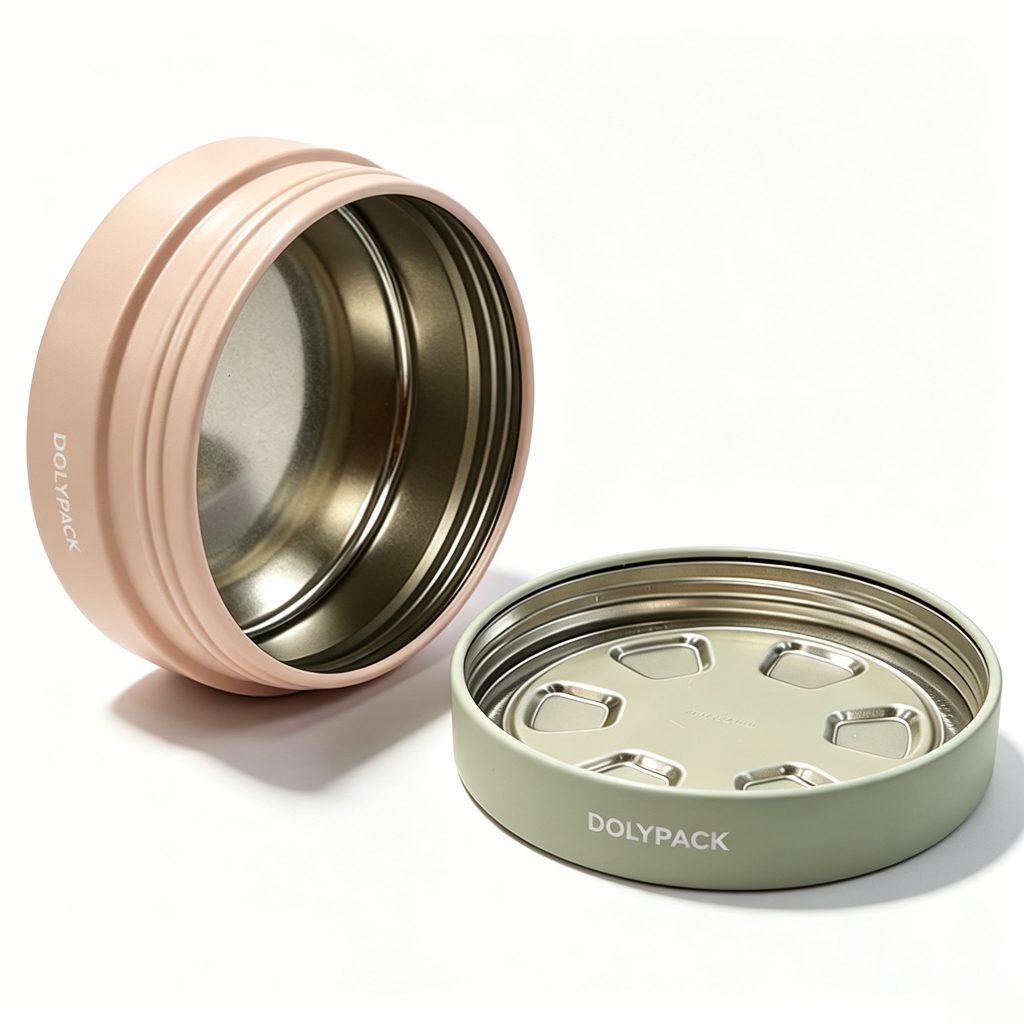
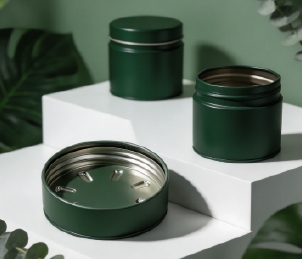
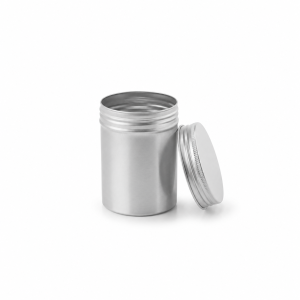
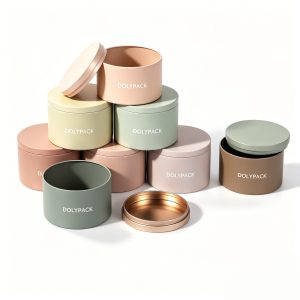
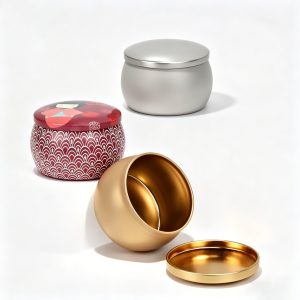
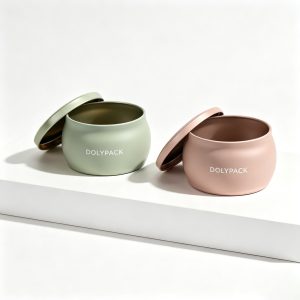
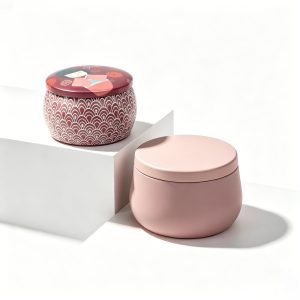
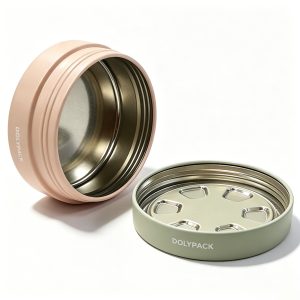
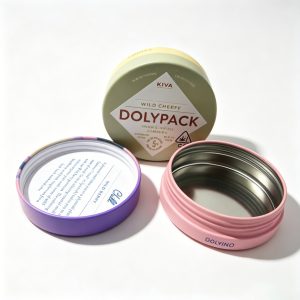
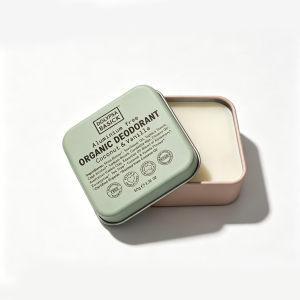
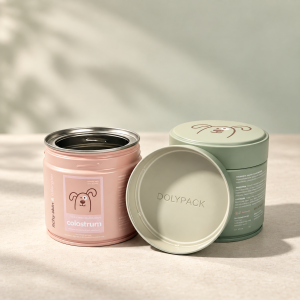
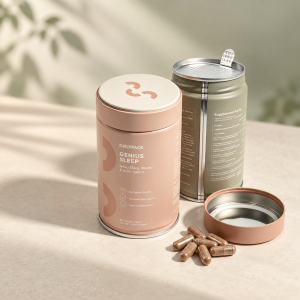
A screw top tin closes with a threaded lid that twists onto matching threads molded or rolled into the tin's neck, locking down tighter than a lid that simply presses into place. Buyers pick the screw thread over a slip-lid when a product ships loose in a case, gets reopened and resealed repeatedly, or needs a closure that won't pop loose from vibration in transit. This guide covers how that thread mechanism works, the shallow and deep size variants, typical dimensions, and which materials hold up for food storage. DOLYPACK's Aluminum Screw-Lid Jars | DOLYPACK cover this closure type in aluminum at production volume.
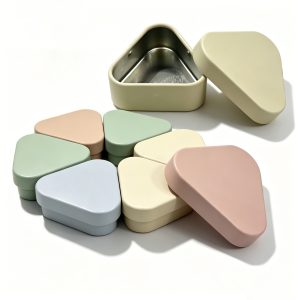
"Screw top" describes the closure, not the body shape. The tin underneath can be round, square, or rectangular; a threaded lid is what makes it a screw top, regardless of outline. That distinction separates closure mechanics from shape choices entirely — a screw thread sits on a round body detailed in the round box guide, on a square body covered in the square metal tins guide, or on a rectangular tin, without changing how the seal itself works.
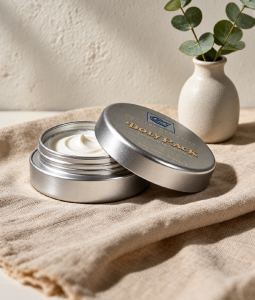
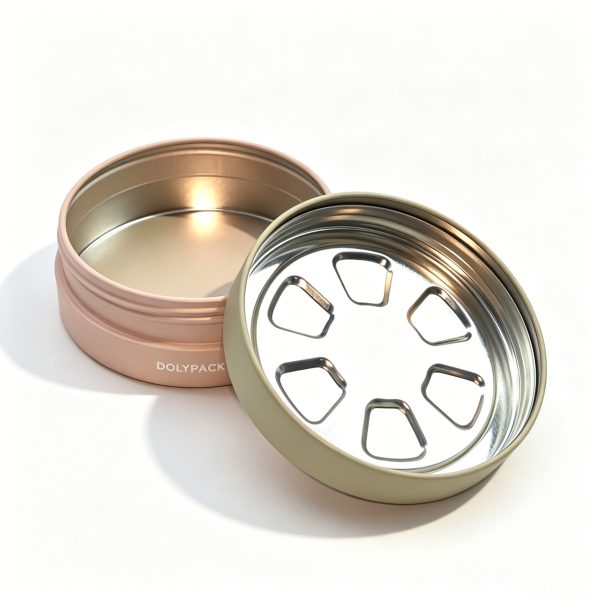
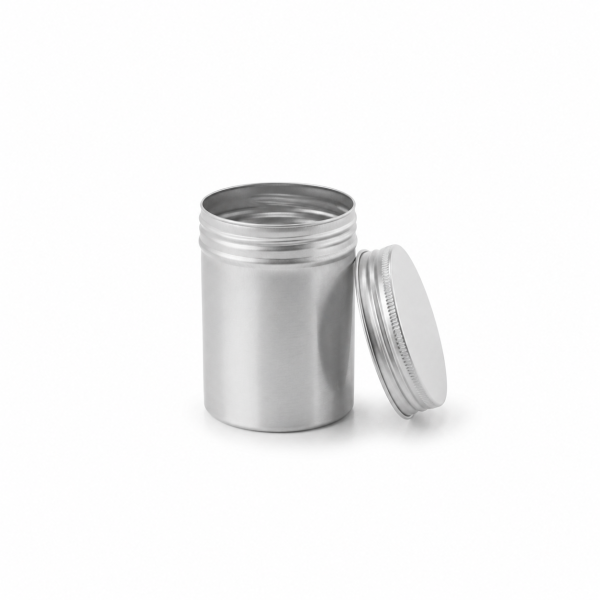
Threads cut into the inside of the lid mesh with matching threads formed into the tin's neck. Sealing typically takes 2 to 4 full turns, depending on thread pitch, until the lid seats flush against the rim. Aluminum bodies for this format typically draw from about 0.20–0.30mm gauge sheet; tinplate steel runs a similar 0.22–0.28mm range but weighs roughly three times as much for the same size, since aluminum's density (about 2.7 g/cm³) is far lower than steel's (about 7.8 g/cm³) — a real factor in freight cost on large orders. Some deep tins add a foam or rubber gasket ring inside the lid for a tighter seal on powders or liquids; shallow balm-style tins often skip it since the product itself doesn't shift much.
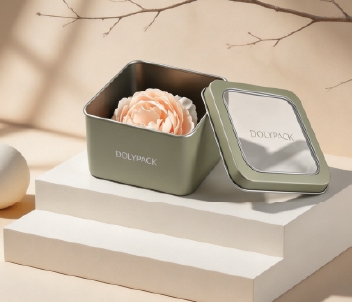
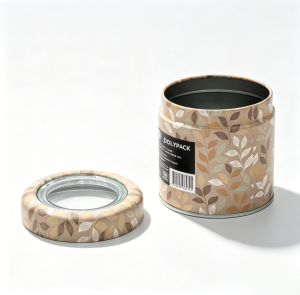
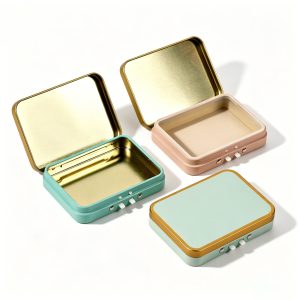
Screw tops sit alongside three other common tin closures: Aluminum Slip-Lid Tins | DOLYPACK that lift off by friction with no turning, Aluminum Click-Lid & Square 3-Piece Tins | DOLYPACK that snap into a rim groove, and hinged tins with a lid attached on a pin that flips open without separating from the body. Each trades sealing strength for opening speed differently — screw threads seal tightest against vibration and rough handling, hinges open fastest, slip-lids and click-lids sit in between. Two related aluminum styles solve different problems without changing the base thread: Aluminum Window Tins | DOLYPACK add a die-cut panel so buyers can check the product without opening the lid, and Aluminum Dual-Layer Screw-Lid Jars | DOLYPACK stack an inner sealing disc under the outer screw lid for products that need extra containment.
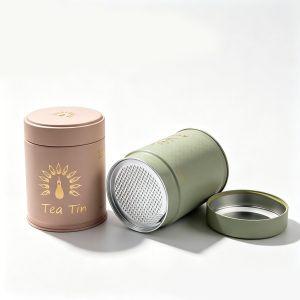
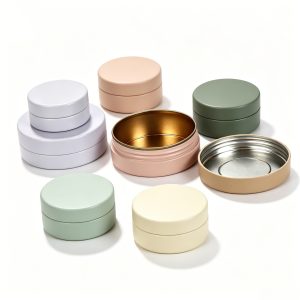
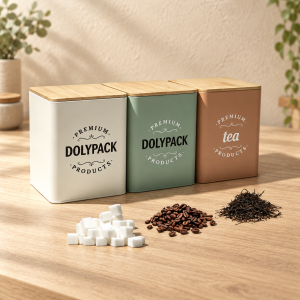
By depth: shallow tins are wide and short, suited to balms, salves, and flat products scooped rather than poured; deep tins hold more volume in the same diameter, better for powders or loose-fill goods. By material: aluminum threads run lighter and smoother than tinplate steel, while tinplate shows up more often in Tinplate Packaging — Cans, Tins & Gift Boxes lines built for candy and food. By use case: Metal Candle Tins use resealable screw threads for wax pours, tea and other dry goods commonly ship in the shallow or deep formats detailed in the tin cans guide, and shallow balm formats appear across lip balm tins options.
There's no single industry-wide standard: dimensions vary by supplier, and the same volume splits differently between diameter and depth depending on whether the body is shallow or deep. Treat the following figures as typical, not exact specs — actual dimensions commonly run ±5–10% between manufacturers.
| Common Volume | Typical Diameter | Typical Depth | Style |
|---|---|---|---|
| 1 oz | ~1.9 in (48 mm) | ~0.6 in (16 mm) | Shallow |
| 2 oz | ~2.5 in (64 mm) | ~1 in (25 mm) | Shallow |
| 4 oz | ~3.1 in (79 mm) | ~1.25 in (32 mm) | Shallow |
| 8 oz | ~3.1 in (79 mm) | ~2 in (51 mm) | Deep |
| 14 oz | ~2.5 in (64 mm) | ~3.75 in (95 mm) | Deep |
The 14 oz format inverts the usual pattern — depth exceeds diameter — because a narrow, tall body holds that volume without widening the footprint.
Aluminum blocks oxygen and moisture transmission on its own, without an internal liner, which is why plain aluminum screw-lid tins suit dry goods like spices or loose tea without added coatings. Tinplate steel needs a lacquer or enamel liner to get comparable protection, since bare steel corrodes on contact with moisture or acidic contents — without that liner, plain tinplate is not a safe choice for anything but dry, non-acidic products. A threaded seal closes tighter against air exposure than a lid that only presses on, which helps either material hold freshness longer once closed.
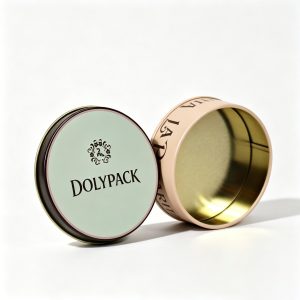
Screw-lid tins take the same decoration methods as other aluminum containers. Self-adhesive labels, screen printing, and laser marking run with no minimum order quantity; full-color printing, custom colors, and cut-out work require a 5,000-unit run. Surface finishes range from matte and glossy to metallic or anodized effects, with embossing, debossing, or laser marking for logo detail. DOLYPACK has produced aluminum and tinplate containers for over 10 years and runs every order through a 6-step quality control process, from raw material inspection through final check before packing. Review printing, finish, sampling, and lead-time options in the OEM/ODM manufacturing process.
Start with the product going inside, then pick shallow or deep depending on how it settles in the tin, confirm volume against the size ranges above, and weigh aluminum's lighter weight and built-in barrier against tinplate's steel structure before settling on a decoration method. Decoration lead time and minimum order quantity move together: self-adhesive labels and laser marking need no minimum and ship in as little as 1–3 days, while full-color printing and custom colors require a 5,000-unit order and run about 25 days. Screw tops for cosmetics, food, industrial, and gift use cross several markets — Applications — Metal Packaging for Every Market breaks down which closure and material fit each one. For sourcing across tin categories beyond screw tops, wholesale tin containers options walks through format, size, and MOQ trade-offs; wholesale tin options lists bulk pricing tiers and case packing for stock formats. Check Aluminum Tin Cost: Prices & What Affects Them for how size and finish move unit pricing, then contact DOLYPACK for a quote based on your specific requirements.
Do screw top tins need liners to prevent rust?
Plain tinplate bodies have no internal liner by default, so contact with moisture or acidic contents can rust the steel over time; a lacquer or enamel liner prevents that contact. Aluminum resists corrosion on its own without a separate liner, though a foam or rubber gasket is sometimes added inside the lid for a tighter seal — a different function from a corrosion liner.
Are screw top tins food-contact compliant?
Compliance depends on the specific material, liner, and finish used, not the closure type alone — a threaded lid says nothing about food-contact status by itself. Confirm any required food-contact certification directly with the manufacturer for the exact material and liner combination before use.
Are screw top tins leak-resistant for liquids?
A threaded closure resists dust, air, and light jostling better than a friction-fit lid, but it isn't liquid-tight unless the lid includes a gasket or seal ring. Dry goods, powders, and balms are a safer default use than free-flowing liquids unless a sealed variant is specified.
What's the smallest neck size available on a screw top tin?
The smallest common formats run around 1 oz capacity with a roughly 1.9-inch (48 mm) outer diameter, putting the threaded neck opening itself at somewhat under 2 inches. Smaller custom neck sizes are possible but move outside typical off-the-shelf ranges.

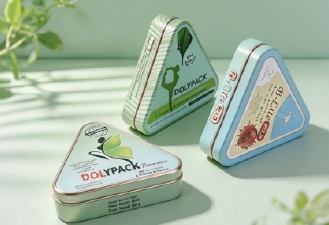
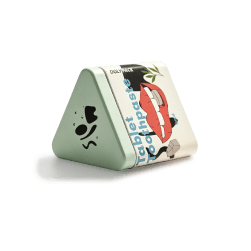
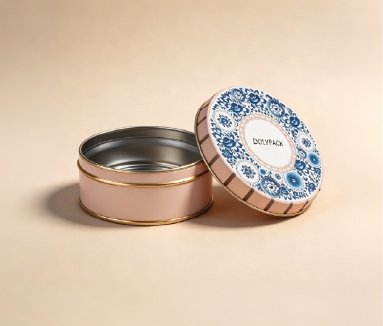
Send your target material — aluminum or tinplate — fill volume, quantity, and preferred decoration method. We typically respond within 12 business hours with pricing and lead time.
Request a free aluminum tin sample to check quality before ordering. Review aluminum tin cost factors to budget your first run, or explore customization options for printing, finishes, and accessories.