Get a Quote
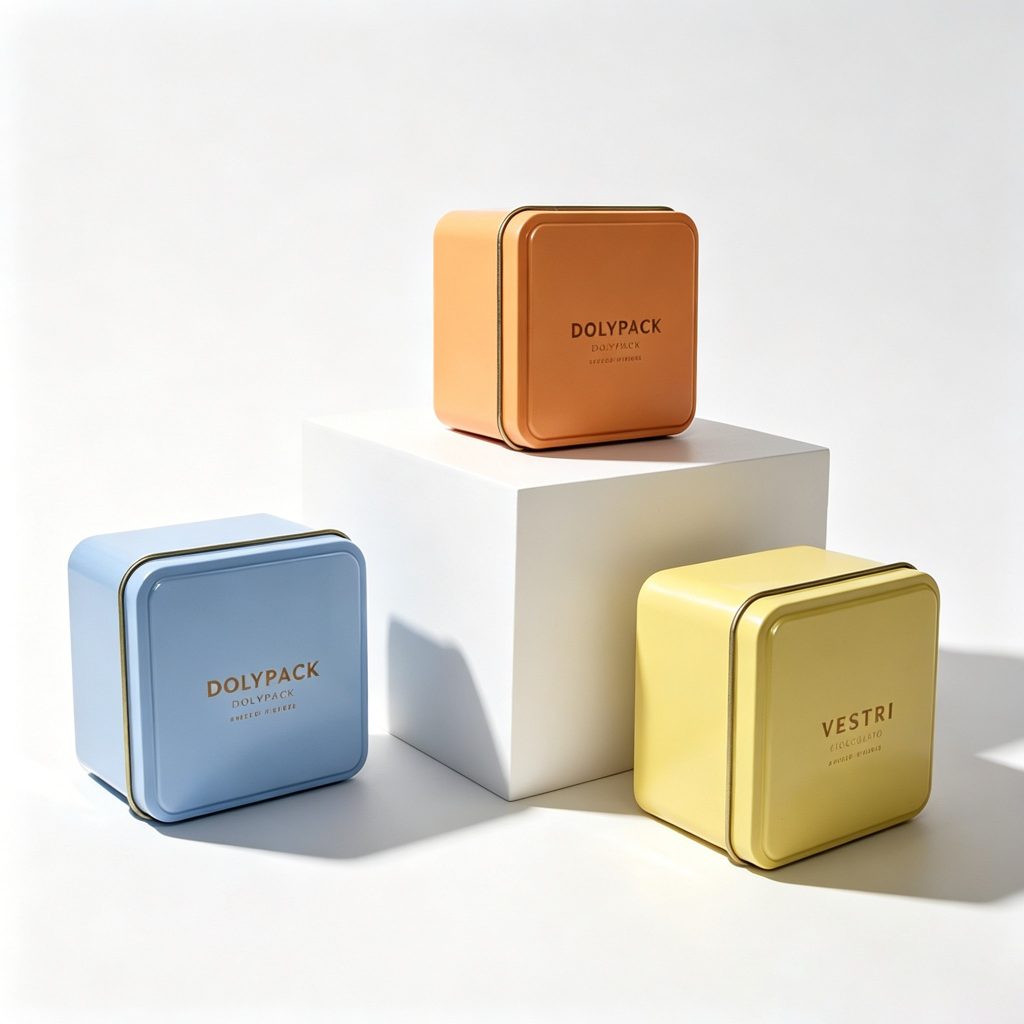
Square metal tins get compared on two different axes that often get merged into one question. Shape — square versus round — decides how a container packs, stacks, and displays on a shelf. Material — metal versus plastic, glass, or cardboard — decides unit cost, shipping weight, and how well the contents are protected.
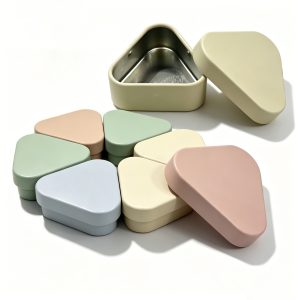
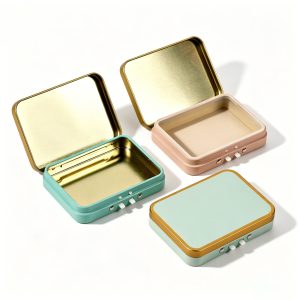
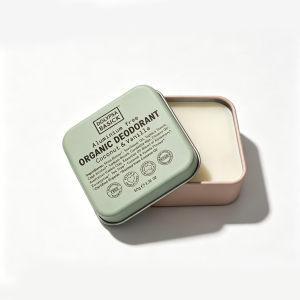
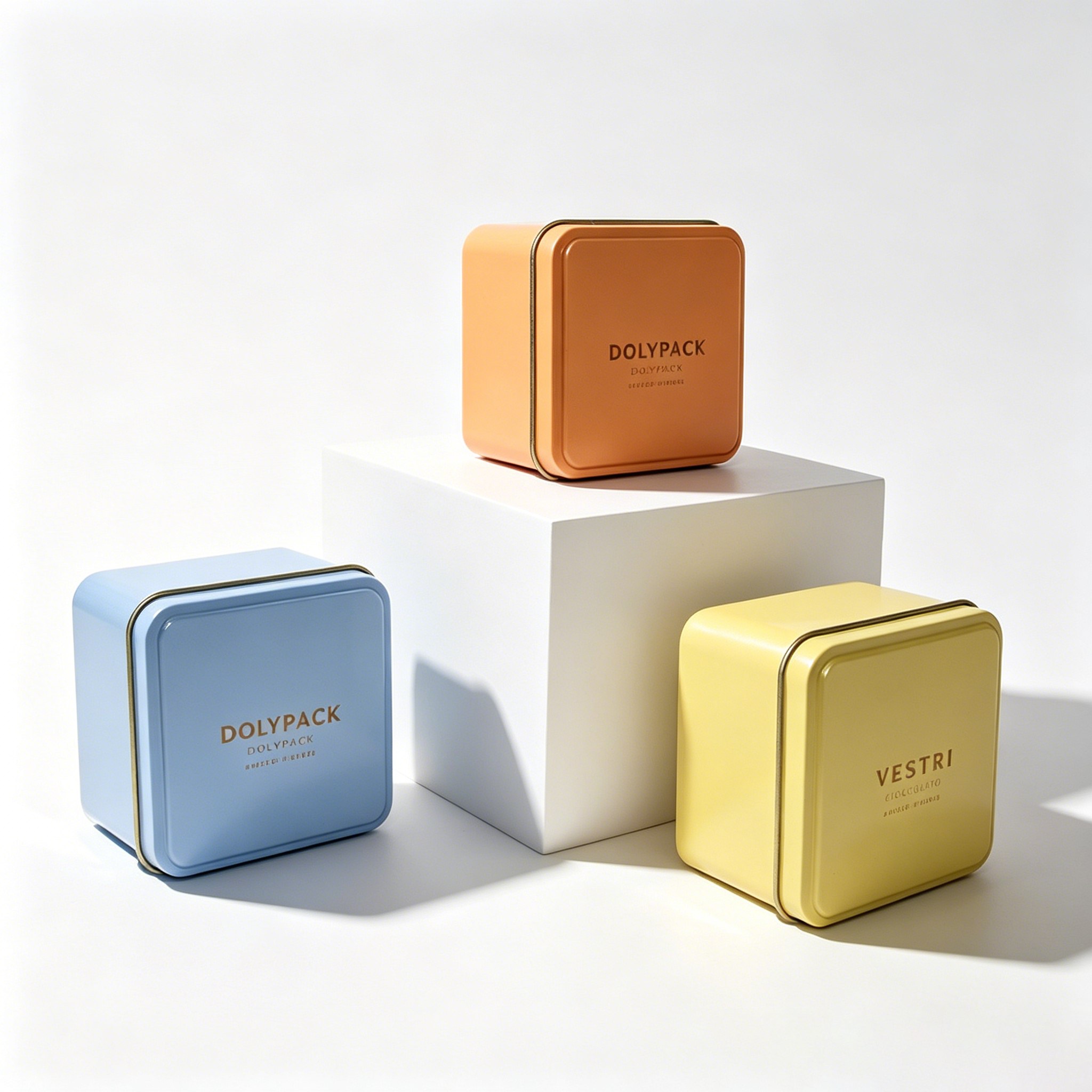
A square or rectangular tin has flat side panels and square corners instead of a continuous curve. That geometry changes three things buyers actually plan around:
Tinplate used for tins commonly runs roughly 0.15mm to 0.30mm thick depending on can size and forming needs — a range consistent with electrolytic tinplate gauges covered under ASTM A623 canmaking specifications — thin enough to form crisp corners, thick enough to hold shape under stacking load. The trade-off is tooling: square dies and corner-forming tools are typically more involved to set up than a round tin’s cylindrical draw, which is why round remains the default for high-volume commodity fills.
| Factor | Square Metal Tins | Round Tins |
|---|---|---|
| Shelf/case density | Higher — flat panels leave near-zero gaps | Lower — circular packing wastes roughly 20–25% of case volume per layer |
| Stacking stability | Flat top and base stack squarely | Can shift or roll unless nested/interlocked |
| Print/branding panel | Large flat panel, easier embossed detail | Curved panel, wrap-around design needed |
| Tooling setup | More involved (corner forming) | Simpler cylindrical draw |
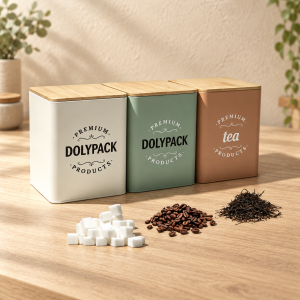
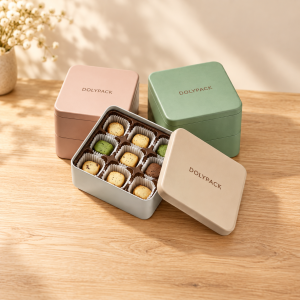
| Best fit | Retail shelf display, gift sets, bar/bite-size products | Bulk shipping runs, traditional coffee/tea/candle formats |
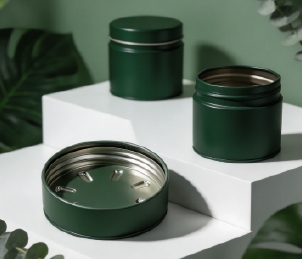
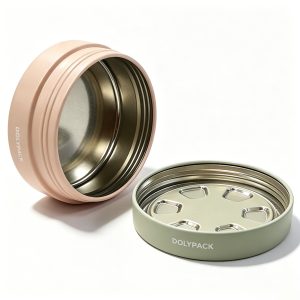
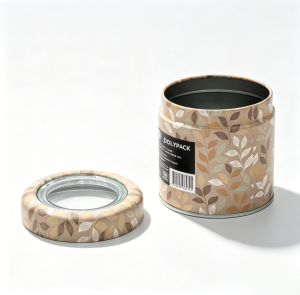
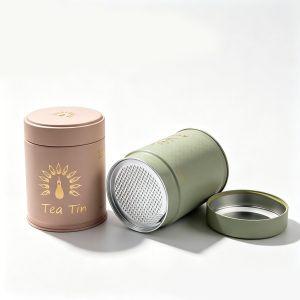
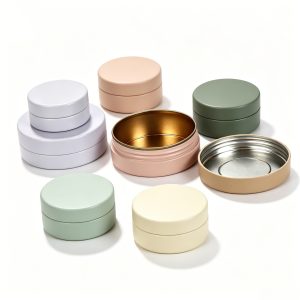
If retail shelf space or case-pack efficiency is the priority, square wins. For products where a cylindrical shape is the standard — coffee, tea, candles — Round Tin Boxes keep tooling simpler while giving up some of the shelf density a flat panel offers.
Metal holds its shape under heat, impact, and repeated handling in ways rigid plastic often doesn’t; a dented metal tin still seals, while a cracked plastic lid usually doesn’t. An empty 100 ml metal tin typically weighs in the 25–40 gram range depending on gauge and lid type, while an equivalent-volume rigid plastic tub often weighs under half that — the source of plastic’s freight-cost advantage. Metal also reads as a premium material at the shelf, a factor for cosmetics, confectionery, and gifting lines where unboxing matters. Metal tins are commonly recycled through standard steel and aluminum scrap streams.
Glass shows the product — useful when color or texture is part of the sell — but it adds breakage risk and shipping weight that metal doesn’t. A dropped tin dents; a dropped glass jar can shatter and take the product with it. Metal also blocks light entirely, which glass (clear or tinted) only partially does — relevant for anything light-sensitive. Glass wins on visible-product appeal; metal wins on shipping durability and barrier protection.
Cardboard is lighter and cheaper to produce, and shoppers often reach for it assuming it’s the more eco-friendly-looking option at the shelf — an impression drawn from the material’s look and feel rather than any stated certification on the pack. What cardboard doesn’t do is survive reuse: it crushes, tears at corners, and loses rigidity if it gets damp. A metal tin is built to be opened and closed repeatedly and often gets kept by the end customer as a container after the product inside is gone — a secondary-use value cardboard rarely earns. For gifting, cookies, or anything positioned as a keepsake, that reusability is the differentiator; for one-time-use, low-margin goods, cardboard’s lower cost usually wins.
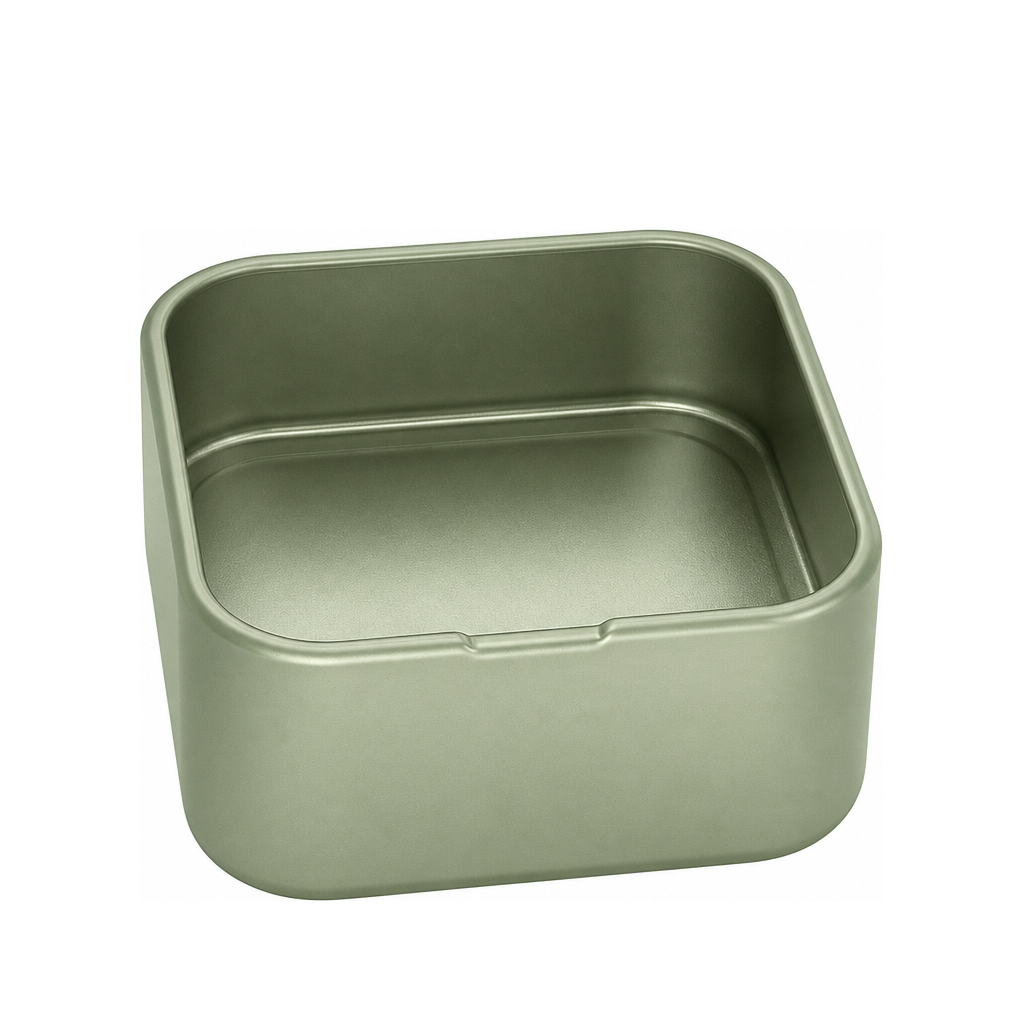
Choose square metal tins when:
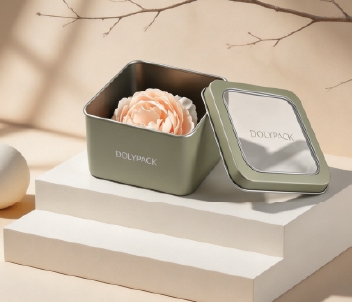
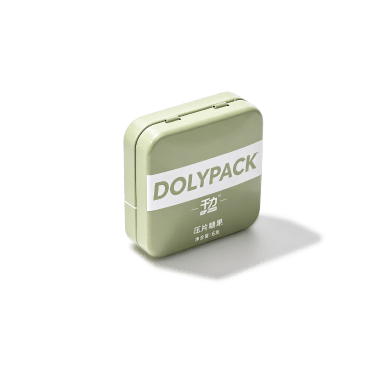
Square tin capacities commonly range from about 30 ml up to 2,000 ml, narrowing further once lid style — slip, click, or hinged — is factored in. Square Tin Boxes lists the sizes and lids available before artwork gets finalized.
Embossing depth on a square panel is governed by metal gauge, body construction, and how sharp the corners are cut. Embossed tin materials and gauge options breaks down which materials hold detail best for that kind of decoration.
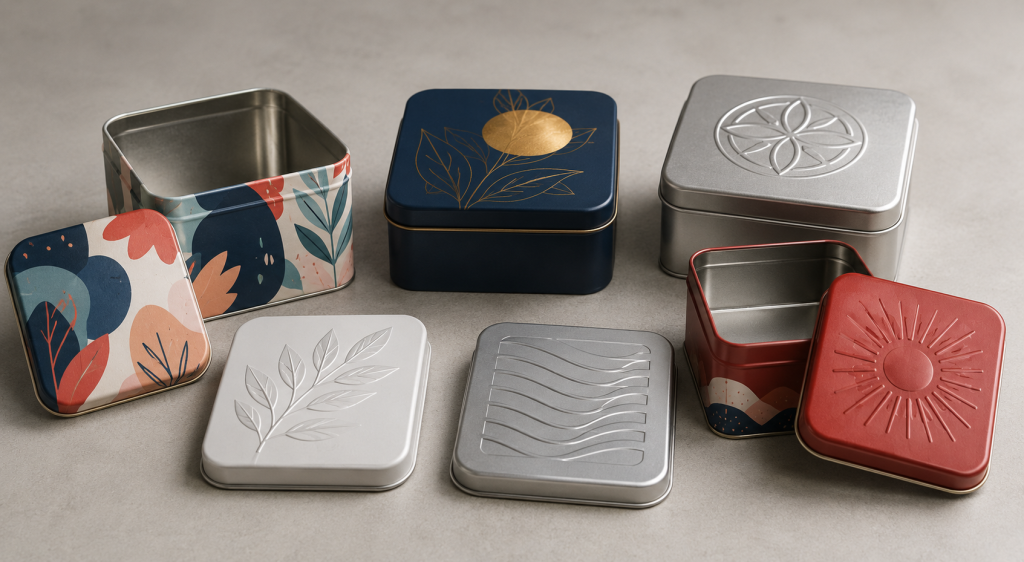
Sourcing splits into two routes, and which one fits depends on quantity and how custom the container needs to be. Stock tins bought through marketplaces or distributors typically carry low minimums — often a single case of a few dozen units — but that stock is locked to existing shapes, sizes, and finishes. Custom-tooled runs from a manufacturer usually start in the low thousands of units once a new die is cut, with lead times commonly running several weeks from artwork approval to shipped goods.
Exact MOQ, tooling cost, and lead time for a specific tin move with gauge, decoration method, and order quantity, so a manufacturer confirms those numbers only after reviewing the container spec and artwork rather than quoting a flat figure upfront.
Existing square tin tooling already covers a range of common sizes and lid types, and matching a project to one of those avoids cutting a new die altogether. Browse square tin box sizes to see what’s already available before committing to custom tooling.
Compare metal against plastic, glass and paper materials at tin case vs alternatives.
It depends on the use case. Square wins for shelf density, case-pack efficiency, and larger flat print panels for embossing or labels. Round wins for lower tooling cost and a better fit with traditionally cylindrical products like candles, coffee, and loose tea.
Metal tins cost more per unit than plastic or cardboard, add shipping weight versus lighter materials, and take longer to produce when custom tooling or embossing is involved compared to picking a stock container off a shelf.
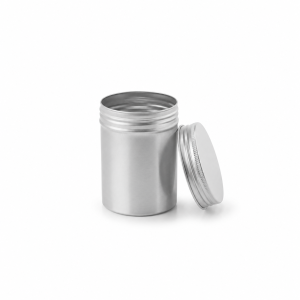
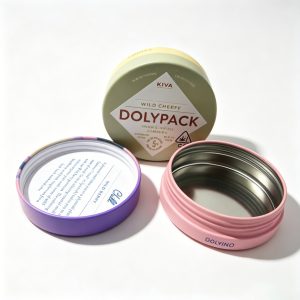
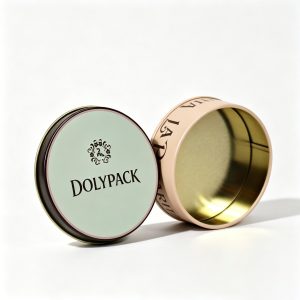
Yes. Common shapes include square, rectangular, round, oval, and flat-profile tins, and each shape is available with different lid mechanisms — slip lids, screw lids, click lids, or hinged lids — depending on how the product inside needs to be accessed and resealed.
Yes. Tin remains standard for candles, cosmetics, tea, and confectionery, where durability, barrier protection, and reusability matter. Plastic and cardboard simply grew market share in low-cost, high-volume categories where shipping weight and unit price matter more than durability or shelf presentation.

Send your target material — aluminum or tinplate — fill volume, quantity, and preferred decoration method. We typically respond within 12 business hours with pricing and lead time.
Request a free aluminum tin sample to check quality before ordering. Review aluminum tin cost factors to budget your first run, or explore customization options for printing, finishes, and accessories.