Get a Quote
Aluminum Coffee Tins
DOLYPACK supplies aluminum coffee tins wholesale for roasters, private-label brands, and gift or subscription programs. Each aluminum coffee tin is matched to whole-bean or ground coffee, the selected lid, and the order quantity before quotation.
Request a Quote
Get Free Samples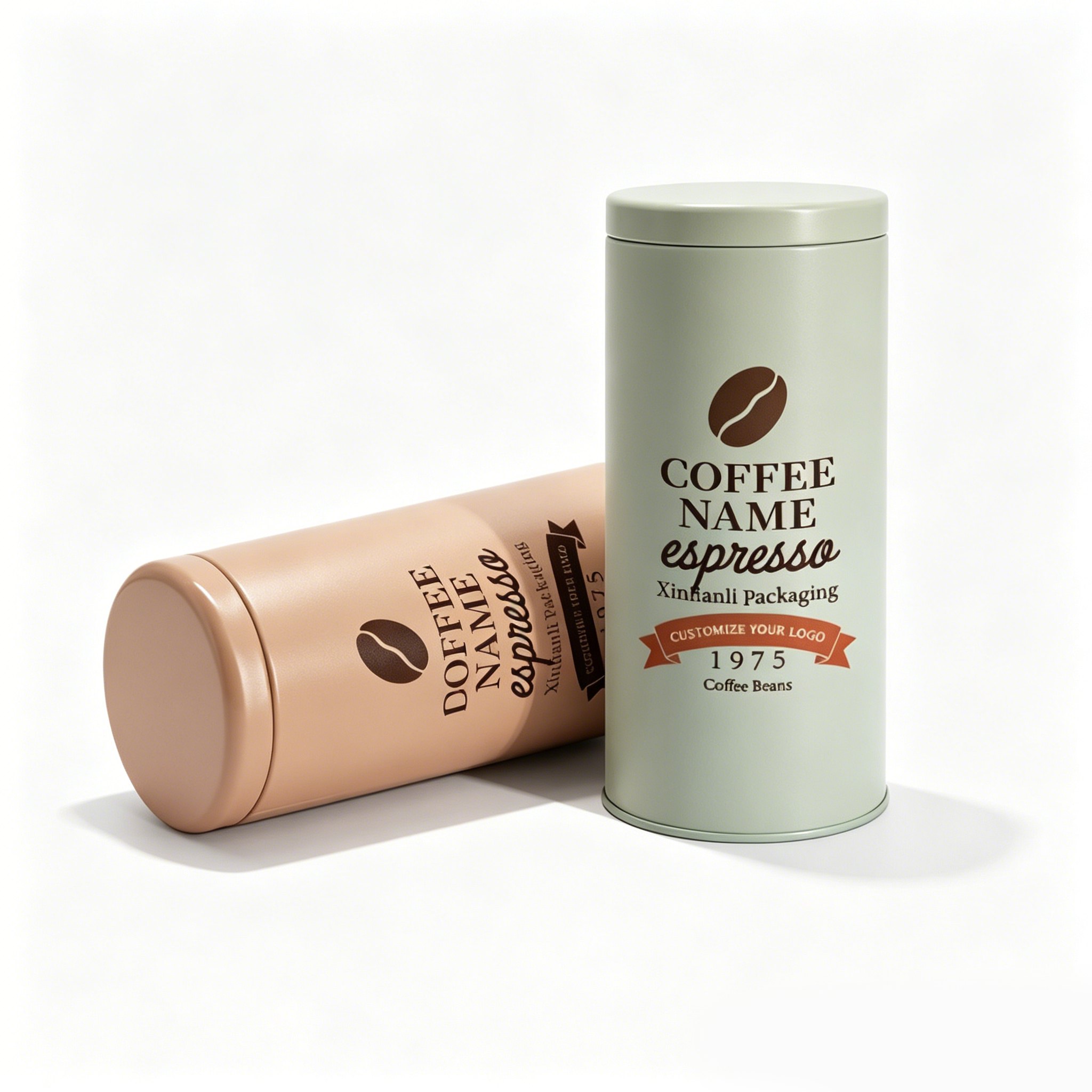

Roasters
Why Roasters Choose Aluminum Tins for Coffee
Three properties make aluminum a workable body for coffee packaging:
-

Light-block
The metal body blocks light across its full surface, slowing the staling that light exposure accelerates alongside oxygen and moisture.
-
Rigidity
A filled tin holds its shape under stacking and shipping, keeping a consistent shelf silhouette that a flexible pouch can't match.
-
Reusability
Screw and click lids allow repeat opening and closing, useful for a retail tin that gets refilled or reused at home.


There are trade-offs. Aluminum can dent more easily than tinplate under impact, so the body gauge and export carton should be matched to the distribution route.
It also usually costs more per unit than a stand-up pouch or kraft bag. Aluminum tins are therefore better suited to retail, gift, and premium positioning than to low-margin bulk shipping.
For other applications, see aluminum tins and jars. For brands packaging both coffee and loose-leaf tea, coffee and tea packaging provides a related application example.
Aluminum Coffee Tin with Lid: Closures, Liners & Seal Options
Lid Types
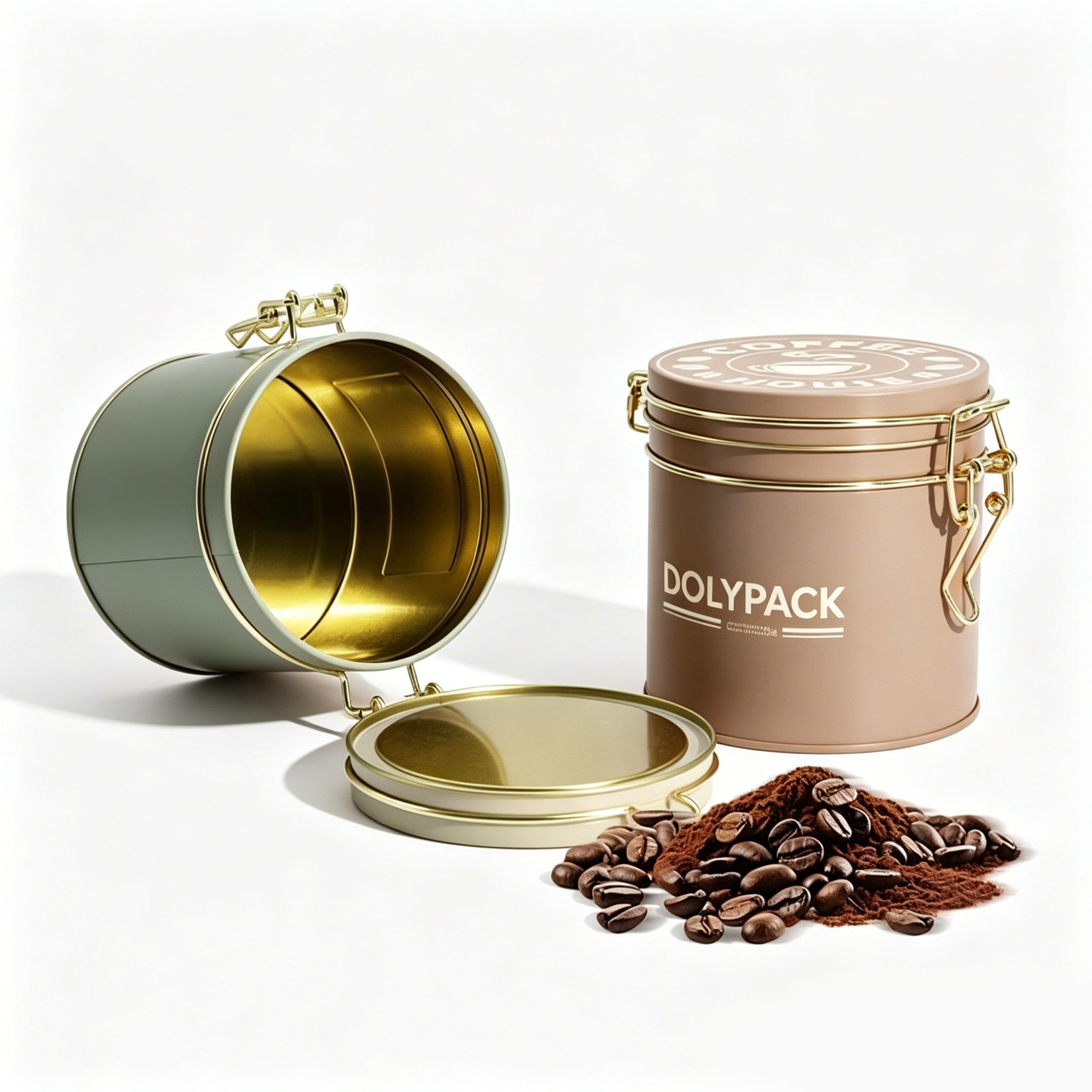
- Screw lid
Suited to retail packs that get opened and closed repeatedly; confirm thread fit and whether a liner or gasket is needed for the coffee format.
- Slip lid
Common for gift sets and seasonal coffee where the tin is opened less often; check whether the coffee also needs an inner seal or a sealed bag inside.
- Click lid
Gives a positive, felt engagement each time the tin closes; the click confirms the lid has seated, not that the pack is tamper-evident, so specify a separate tamper feature if one is required.
- Window lid
Used to display whole beans at retail; the window material, attachment method, and light exposure through the window all need review for the intended shelf life.
Liners, Seals & Valve Options
Ground coffee and whole beans behave differently inside the same body. Ground coffee settles more densely and can shift during transport, so a liner that stays seated against vibration matters more.
Whole beans continue releasing carbon dioxide for a period after roasting. The roast-to-pack interval should be part of the sizing conversation because it affects whether the pack needs a one-way degassing valve or a different filling process.
Need a valve-ready body instead? Tinplate coffee cans already carry an integrated degassing-valve structure; for an aluminum body, valve compatibility is confirmed against the chosen lid and seal assembly at quotation. Comparing gasket and liner fit across lid types in more depth? Tin containers with lids covers that.
Material, Coatings & Food-Contact Documentation
-
Material specifications
Alloy grade and wall thickness are confirmed against the container drawing. Thin-gauge gift tins and heavier bulk canisters may require different specifications based on body design and fill weight.
-
Direct-contact review
Confirm whether coffee contacts the aluminum directly or is packed in a separate bag. For direct-contact packs, the internal lacquer, lid or liner, and any adhesive or window component are reviewed together before sample approval.
-
Food-contact documents
If your market requires FDA- or EU 10/2011-related documents, migration reports, or other declarations, submit the requirements with your inquiry. DOLYPACK confirms the applicable documents for the selected construction rather than issuing blanket certifications.
Aluminum Coffee Tin Sizes & Capacities
DOLYPACK’s aluminum packaging spans 5 ml to 6,000 ml, with two low-profile flat-tin formats — 60 ml and 130 ml — already in the working range alongside standard cylindrical bodies. Screw caps for these bodies are sized from Ø17.5 mm to 89 mm, fitted to the tin’s opening once the body diameter is set.
| SKU | Capacity | Diameter × Height* | Lid type | Approx. ground coffee* | Approx. whole bean* |
|---|---|---|---|---|---|
| Sample / trial tin | 60 ml | ~74 × 15 mm | Slip or screw lid | ~24 g | ~21 g |
| Retail single-serve tin | 130 ml | ~74 × 32 mm | Screw lid | ~52 g | ~46 g |
| Standard retail tin | ~300 ml | ~83 × 118 mm | Click or screw lid | ~120 g | ~105 g |
| Large aluminum coffee tin | up to 6,000 ml | confirmed per drawing | Screw lid with liner | up to ~2,400 g | up to ~2,100 g |
*Diameter and height shown are typical for the stated capacity and are confirmed per drawing before tooling. Gram equivalents are estimates based on average bulk density and shift with roast, grind, and settling — a fill test with your coffee sample locks in the real number.
Looking for a bulk canister beyond this range? Extra large tin containers cover the top end. Want a straight-wall body without a shoulder instead? Cylinder tins are the shape-specific option.
Request a Quote — send your target net weight and bean or ground format for a size check.
Customization: Embossing, Printing & Finishes
Embossing & Debossing
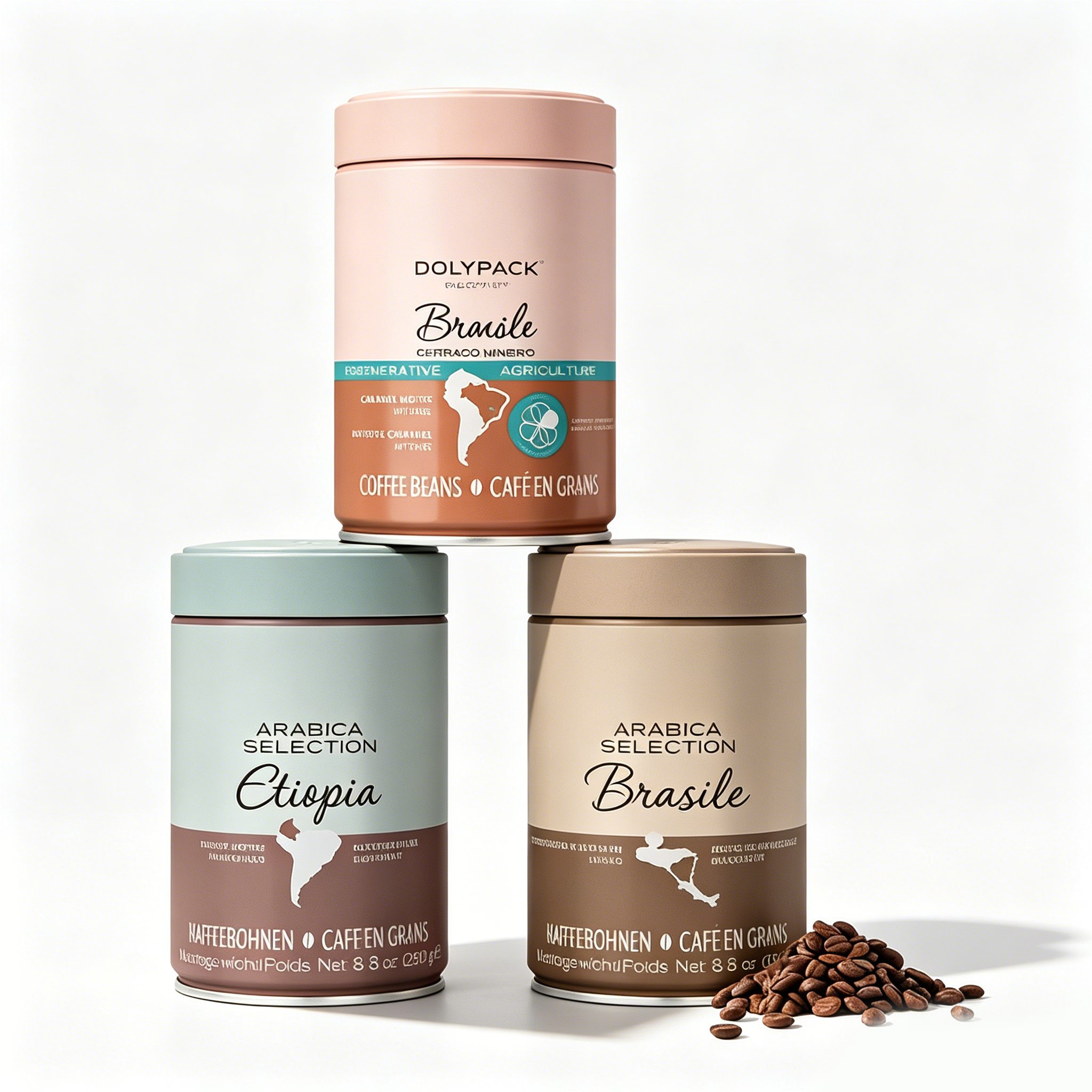
Raised or recessed branding is produced through matched dies pressed into the body or lid. Bold shapes — a wordmark, a simple icon, or a thick-lined logo — reproduce more reliably than fine detail, since metal gauge, body curvature, and seam placement all limit how sharp an embossed line stays.
Artwork should be supplied as vector files (AI, EPS, or vector PDF) so the tooling team can translate the design into die depth accurately. If you are deciding between metal gauges for a deep emboss, the embossed tin material guide compares reproduction depth across bodies.
Finishes & Print Methods
Embossing is often combined with a separate finish or print method:
- Finishes
Matte, glossy, frosted, metallic effect, lacquering, anodizing (aluminum-specific), spot varnish.
- Print methods
Self-adhesive labels, screen printing, laser marking, full-color printing.
Indicative MOQ Tiers & Lead Times
MOQ and lead time track the decoration method, not one fixed number across every design:
| Tier | Decoration | Tooling needed | Indicative sample lead time | Indicative production lead time |
|---|---|---|---|---|
| Tier 1 | Laser marking or self-adhesive label | None — existing tooling | ~4–6 business days | ~15–20 business days after artwork approval |
| Tier 2 | Screen printing | None — existing tooling | ~5–7 business days | ~15–20 business days after artwork approval |
| Tier 3 | Emboss / deboss | New die required | ~10–15 business days for tooling, then sample | Confirmed once die is cut |
| Tier 4 | Full-color print, custom color, or cut-out detail | Typically from 5,000 units | ~15–20 business days | ~25 business days after artwork approval |
These are indicative ranges, not fixed commitments. DOLYPACK confirms exact MOQ, tooling cost, and schedule once your artwork and container drawing are reviewed together.
Need a proprietary body shape with new tooling from scratch? Custom tin packaging covers that development path.
Aluminum vs Other Coffee Packaging Materials
If you need more rigidity or valve compatibility than a standard aluminum body can provide, the tin vs. aluminum comparison explains when tinplate is the better choice for handling.
If lower unit cost is the priority, the aluminum tin vs. plastic comparison shows when a pouch or kraft bag may be more practical, along with the trade-offs of choosing a rigid tin.
Sourcing Aluminum Coffee Tins from DOLYPACK
Requesting a quote starts with the tin body, decoration method, artwork, and any tooling the design requires. DOLYPACK reviews these details with your sample route and order quantity before confirming MOQ, tooling cost, and production timing.
A coffee tin using existing tooling and a label follows a different route from a fully custom embossed body with new dies. For an accurate quotation, include the following information:
-
Product & Fill
Whole-bean or ground coffee, plus the target net fill weight.
-
Sample or Density
A product sample or measured bulk density, if available.
-
Roast-to-Pack Timing
The expected interval between roasting and packing, if beans will be packed soon after roasting.
-
Lid & Protection
Preferred lid, liner, tamper-evident feature, or valve requirement.
-
Contact Method
Whether coffee will contact the aluminum directly or remain inside a separate bag.
-
Order & Artwork
Order quantity, destination market, and artwork or preferred decoration method.
For more on what affects MOQ across tin formats, see the wholesale tin containers guide.
Why Source from DOLYPACK
DOLYPACK’s in-house tooling team has produced 441+ reference packaging designs shipped to over 80 countries across more than a decade in metal packaging. This experience spans cosmetics, food, wellness, and candle lines alongside coffee tins.
In-house tooling covers both existing molds and fully custom dies, so a non-standard capacity or proprietary embossed shape does not require sourcing an outside toolmaker.
FAQ
What’s the MOQ for a custom aluminum coffee tin?
MOQ depends on the decoration method — a laser-marked or labeled tin typically clears a lower minimum than a design needing new embossing tooling or full-color printing across the body. Exact MOQ is confirmed after DOLYPACK reviews your artwork, tin body, and decoration method together.
Is there a cost for samples?
Sample cost and lead time depend on whether the request uses existing tooling or requires a new die or print setup. Submit your specification and DOLYPACK confirms sample terms as part of the quote.
How long does custom tooling take?
Tooling timeline depends on the design’s complexity — bold, simple shapes for embossing or debossing typically move faster than fine detail or a fully custom body shape. DOLYPACK confirms the schedule after reviewing your vector artwork and drawing.
Are metal coffee cans still made?
Yes — aluminum and tinplate coffee cans remain in active production for roasters and private-label brands. DOLYPACK supplies both structures currently, sized and decorated per order rather than pulled from a discontinued catalog.
How long does coffee last in a tin can?
It depends more on the closure and seal quality than on the metal itself — a well-fitted lid, liner, and any degassing valve determine how well the tin holds freshness after opening and between uses.
Related Products
You May Also Like
Other tin and metal packaging formats from the same catalog.
Request a Quote
Send your coffee format, target size, lid preference, and decoration idea and DOLYPACK will confirm the tin construction, MOQ, and timeline together. Request a Quote or Get Free Samples to start a fit test.
Request a Quote
Get Free Samples